Author name: Paul Brown

Exhibiting at the NEWART Centre in Reus

I’m currently exhibiting in the AND PRAXIS show at the NEWART Centre in Reus. https://newartcentre.es/en/paul-brown-en/
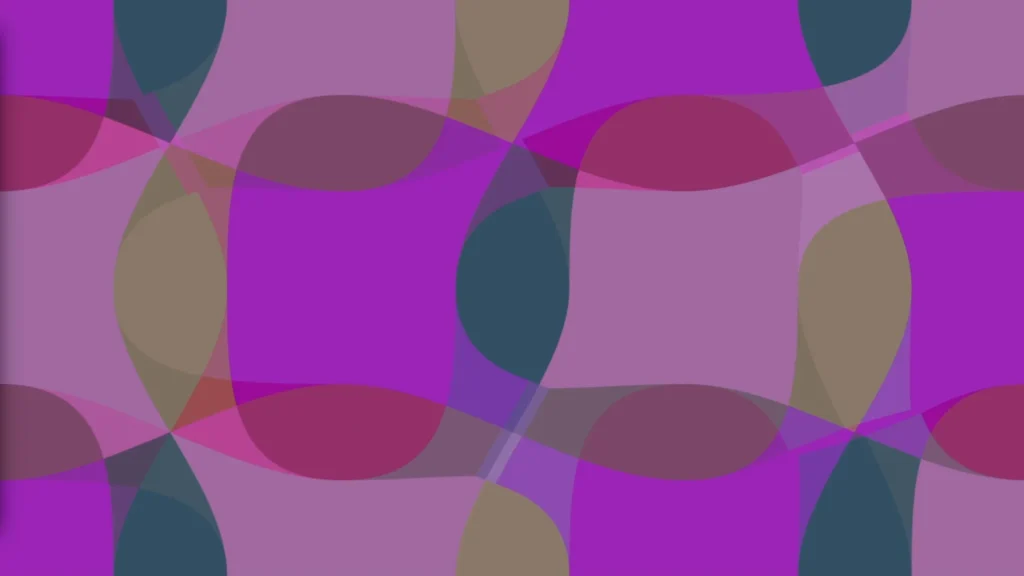
Double Dragon is a kinetic painting created by digital colonies of artificial agents, small programs that use artificial intelligence and artificial life to interact. Each agent observes its neighbours and adjusts its behaviour to the overall state of the group, and from these simple rules emerge patterns, movements and forms that no single agent could produce alone. It is, as Brown puts it, ‘a kind of art that makes itself,’ in which the final image is not designed but emerges from the system. Brown began working with generative systems in the 1960s, influenced by Systems Art and Art Concret, European movements rooted in Constructivism, De Stijl and the Bauhaus. He calls this approach ‘the Geometric Sublime,’ where simple rules give rise to ‘an immense and unexpected richness of form.’ The word ‘colonies’ also carries another meaning: it acknowledges Australia’s post-colonial legacy, and Brown pays his respects to the Minjungbal people of the Bundjalung Nation, traditional custodians of the land on which he lives and works.


Exhibiting in Beijing

Artwork by Paul Brown
36 Knots for Fu Hsi, Plotter Drawing, 1979

This work, based on the I Ching or Book of Changes, will be exhibited at the 5th Creative Machines Show at the Taikang Art Museum, Beijing, from 16/11/2024 to 20/02/2025.

Fu Hsi was the legendary discoverer of the Yang (whole) and Yin (broken) lines that compose the eight Trigrams of the ‘I Ching’ or ‘Book of Changes’.  It is one of the world’s oldest books and its traditional roots date back almost 4 millennia.  In his ‘Science and Civilisation in China’, Joseph Needham described it as the principal canonical text of Chinese history, science and culture.  In his studies and writings, the artist has explored the book and believes it is an ancient generative system – a symbolic cosmology.  The book composes an emergent process that uses permutations of the two basic principles –Yin and Yang – to build a system that describes the universe, its evolution and destiny.  It can also be interrogated as an oracle – divining the current time of the consultation within the continuum of past-present-future which it encompasses.  This permutative structure has been a continuing influence on the artist’s practice and informs much of his output since the late 1960s when he first encountered the book.  In this drawing, which is dedicated to Fu Hsi, three bands are drawn one on top of the other and then permutated to create a total of 36 unique open knots that compose the full set of possibilities so that it becomes a complete formal grammar. 

Scroll to Top